smallerthan.life

smaller than life

A small world you watch rather than play. Land, weather, plants and bodies follow written rules. Everything the people do comes out of them: what they eat, where they go, what they make, and what they build.

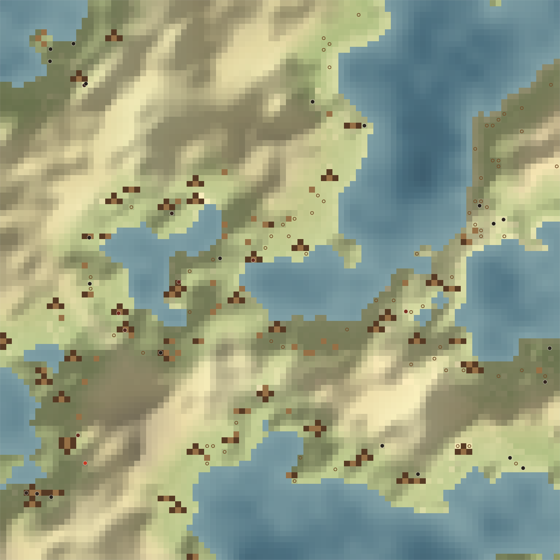
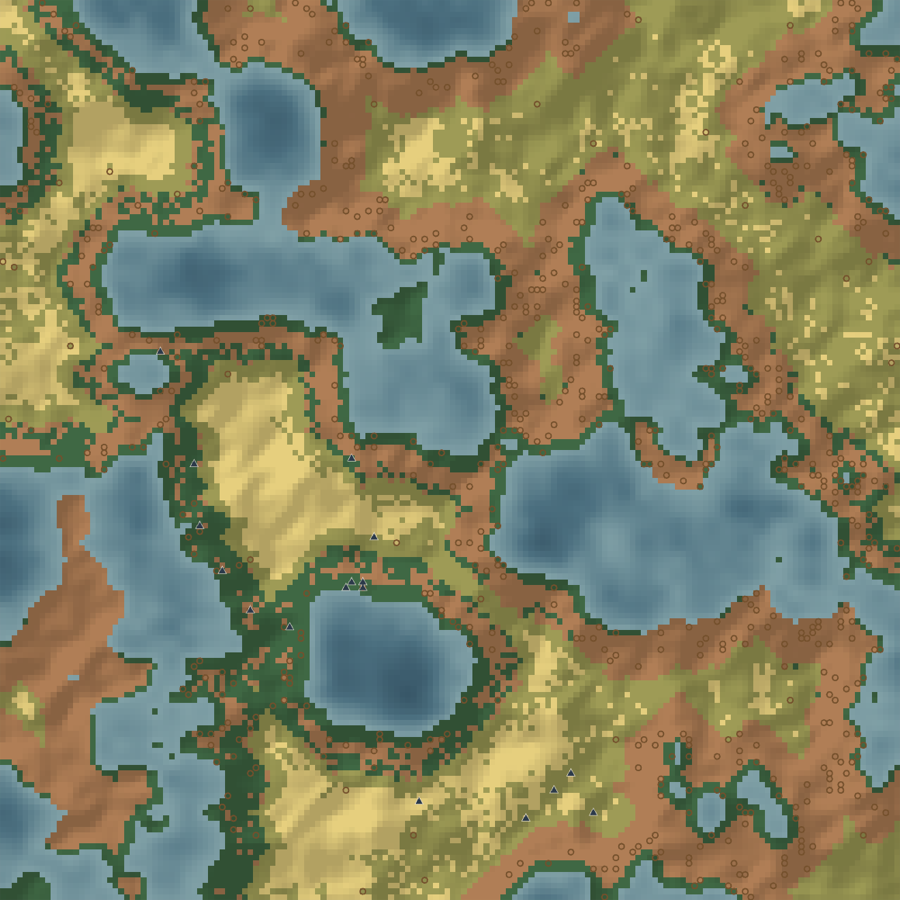
A pixel map of an island with green and sandy hills, blue water, and scattered brown squares of walls and roofs, with dark dots for people.
Plate I An island in its fifth year: twenty-four people and nearly two hundred rooms. step 10 · memory · seed 19 · year 5

From bare land to a village

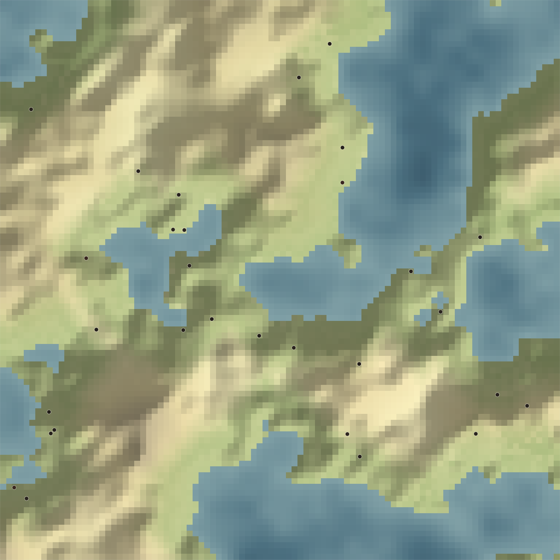
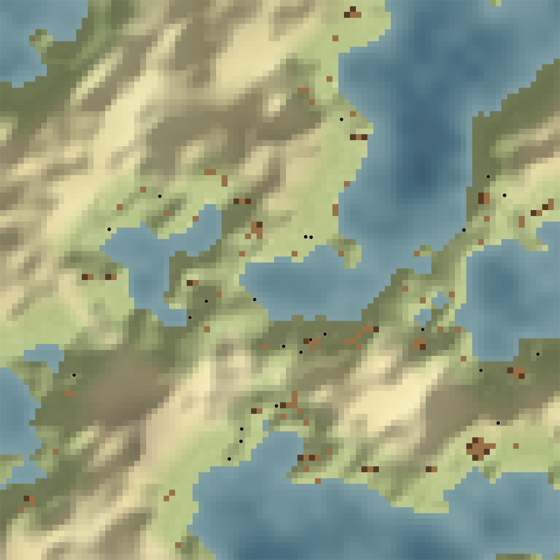
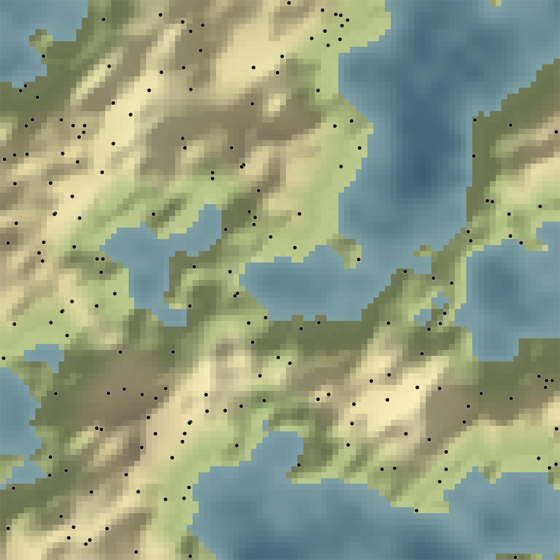
The same island in its third year, with more of the world switched on at each step. One seed gives the same land every time, so only what lives on it changes.
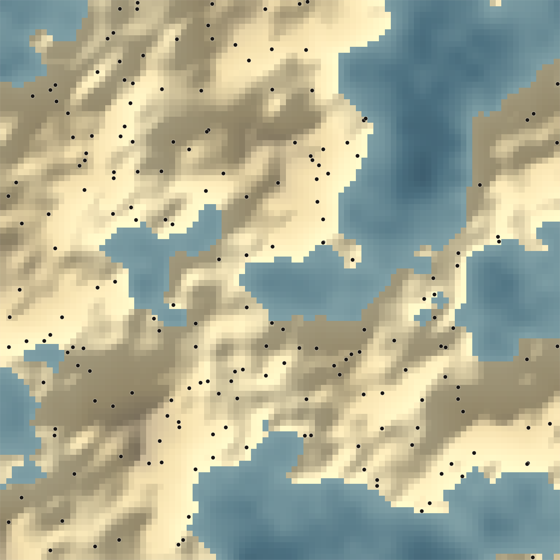
  1. Bare sandy hills and water, with dots wandering at random. 1 · land
  2. The same island turned green where plants have grown. 2 · plants
  3. The green island with people foraging across it. 4 · foraging
  4. The island dotted with small brown huts. 8 · building
  5. The island with walls along the shores, built by people who remember where food was. 10 · memory
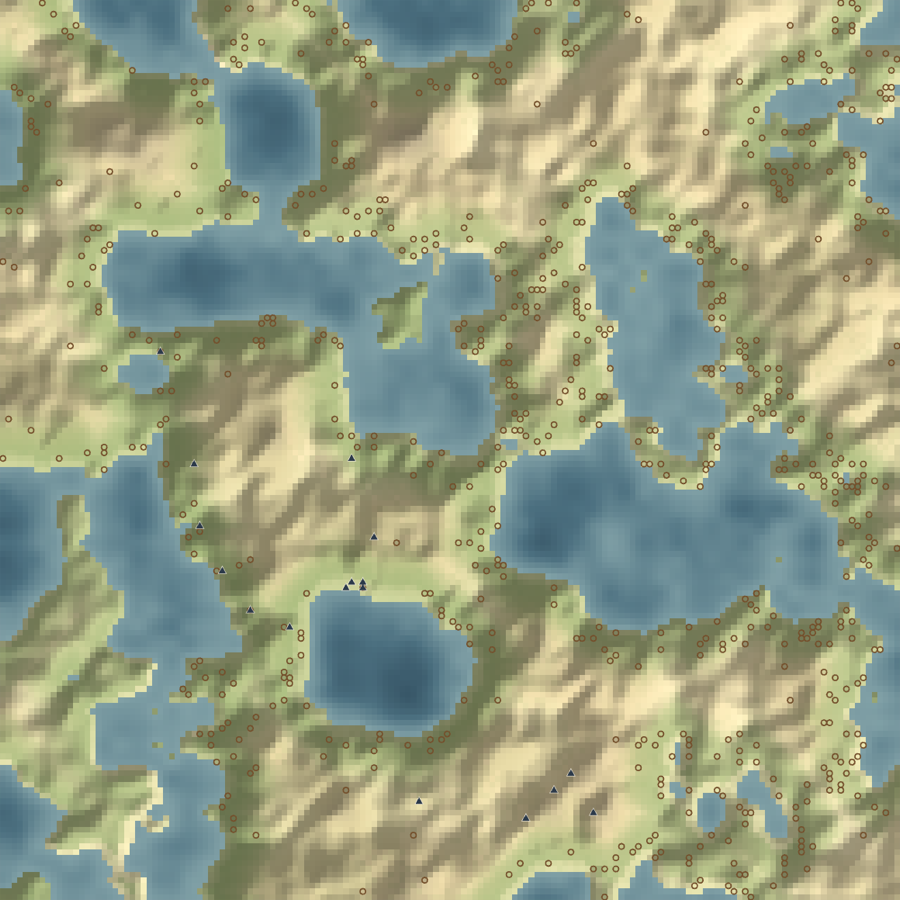
A larger map of lakes and hills covered in small rings, each one a grazing animal.
Plate II The wilds, with no people: 688 grazers and 32 predators. wilds · seed 3 · year 4
The same map coloured by its commonest plant: rust-red shrubs, yellow grasses, dark green trees along the water.
Plate III The same land, coloured by whichever plant has taken each place. wilds · seed 3 · year 4 · dominant plant

Nothing is prescribed

There is no list of tools or buildings. Materials are numbers, like hardness and toughness. People find out what works by trying, remember it, and teach it to their neighbours. Walls and roofs go up one tile at a time, wherever someone chose to put them.

Every run can be replayed

A world is a seed. The same seed gives the same world, bit for bit, on any computer. Any moment can be revisited, or branched with different rules to see what else might have happened.

Lives, not scores

Nobody wins. Villages thrive, move on, or starve, and every starvation is traced back to its cause, so each world leaves behind a history to read.
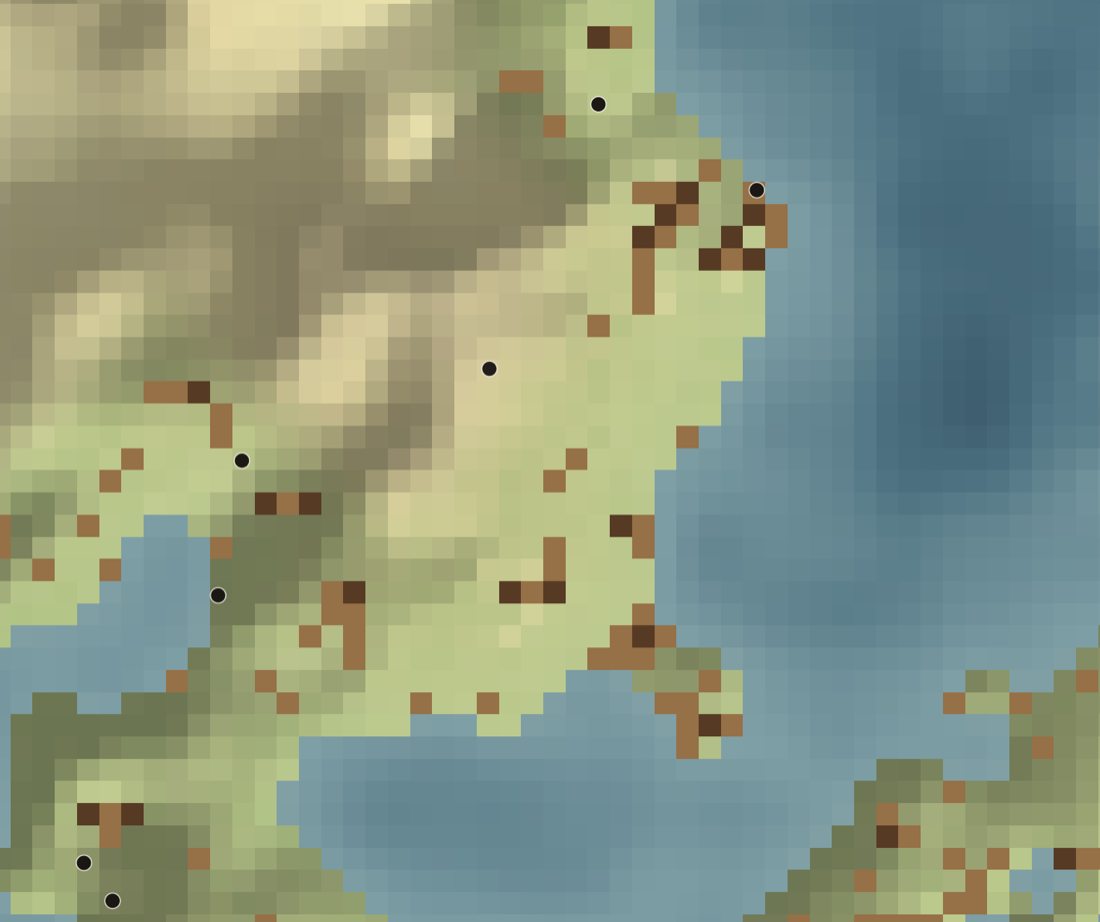
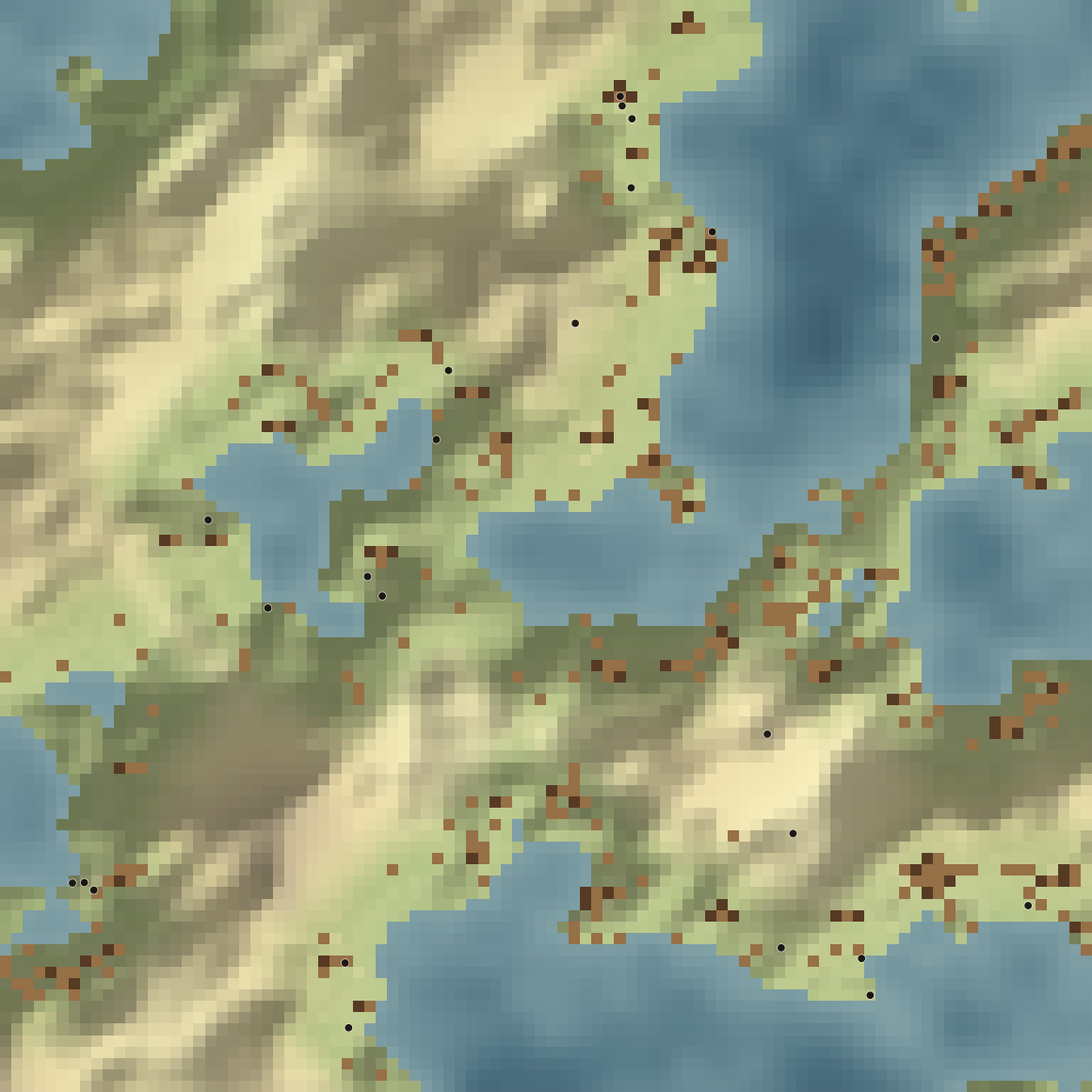
A close view of a shoreline settlement: brown wall and roof tiles among green hills, with dark dots for people.
Plate IV A shore settlement from Plate I, up close. Each square is one tile of the map. step 10 · memory · seed 19 · year 5